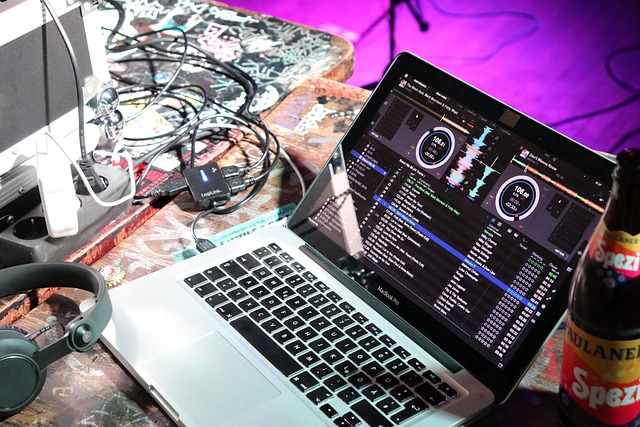
In 2006, Spotify was just two people in Stockholm annoyed at how hard it was to stop music piracy and still make listening easy. No app, no funding round, no proof it would work. Just a problem worth solving and a rough idea of how to solve it. Nearly twenty years later, it’s a platform millions of people open every single day.
You’re probably not trying to build the next Spotify. But you might have your own version of that moment: a nagging idea for a booking system, a members’ platform, a marketplace, a tool that fixes something annoying in your industry. The gap between “I have an idea” and “I have a working product” feels enormous — but it’s smaller, faster, and cheaper to close than most people think.
Why most good ideas never get built
It’s rarely the idea itself that stalls people. It’s usually one of three things: not knowing where to start, assuming it’ll cost tens of thousands of pounds before you find out if anyone wants it, or getting quoted a six-month build with no fixed price at the end of it. Those fears are reasonable — traditional software development earned that reputation. But it’s not the only option anymore.
What’s actually changed
AI-assisted development has genuinely shortened the distance between idea and working product. Tasks that used to take weeks of manual coding — building out screens, wiring up databases, handling payments — can now be scaffolded and built far faster, without cutting corners on quality. That doesn’t mean an idea builds itself. It means the humans doing the building can move quicker, price more confidently, and hand you something real sooner. At By Design UK, that’s exactly how we work: custom platform development at a fixed price, with full code ownership handed to you at the end — not licensed back to us.
If your idea is more retail than platform — say, a product line you want to sell online rather than a tool people log into — the same principle applies through a different route: a properly built Shopify store designed around how you actually want to sell, not a bloated template you’re fighting against.
How do you know if your idea is worth building?
You don’t need a business plan or a pitch deck to find out. Ask yourself three things: does this solve a problem you or people you know genuinely have, would you use it yourself if it existed tomorrow, and can you describe what it does in two sentences without jargon. If the answer is yes to those, it’s worth a proper conversation with someone who builds this kind of thing — not to commit to anything, but to find out what a first version would actually involve, cost, and take to launch.
Starting small on purpose
Spotify’s first version didn’t have social playlists, podcasts, or algorithmic recommendations. It played music without crashing and let you find a song faster than downloading it illegally. That was the whole point — prove the core idea works before adding anything else.
The same logic applies to your idea. You don’t need every feature you can imagine on day one. You need the smallest version that solves the actual problem, gets in front of real users, and tells you what to build next. That’s a far cheaper, faster, less risky way to start than trying to build the “finished” version straight away — and it’s how we scope every fixed-price build we take on.
What happens after launch
An idea doesn’t stop needing attention once it’s live. Users find bugs, ask for features, and the platform needs to stay online, secure, and fast as more people use it. That’s where a lot of founders get caught out — the build was fixed price, but the aftercare wasn’t planned for. Our ongoing support plans exist for exactly that stage, so your platform keeps working while you focus on growing it.
Spotify’s founders didn’t know it would become what it is today. They just built the smallest thing that solved a real problem, then kept going. If you’ve got an idea you keep coming back to, that’s usually a sign worth listening to. Get in touch and we’ll talk through what a first version could actually look like — or browse the blog for more on how ideas like yours turn into real platforms.
FAQ
Do I need a technical background to build a platform like this?
No. Most founders we work with have never written a line of code. Our job is to translate your idea into a working platform, explain the decisions in plain English, and hand over something you fully own and understand at launch.
How much does it cost to build a first version of an idea?
It depends entirely on scope, which is exactly why we quote a fixed price after understanding what you’re trying to build, rather than an hourly rate that can spiral. Get in touch and we’ll give you a clear number before any work starts.
What if my idea changes once I see it built?
That’s normal and expected. Starting with the smallest working version means changes are cheap and quick to make, rather than discovering a mismatch after months of development on a fully-featured build.